LITHO is the native token of the Lithosphere network. wLITHO is its wrapped counterpart, designed to operate in EVM environments. Thanos Wallet supports both in the same interface because a user active across both environments needs access to both — and switching wallets to manage each one defeats the purpose of multi-chain support.
Wrapped tokens exist because different blockchain environments speak different technical languages. The Lithosphere network runs its own execution environment with its own token standard and its own transaction model. EVM-compatible networks — Ethereum and the chains that share its architecture — run a different model entirely. A token that is native to one of these environments cannot be used directly in the other without translation, and that translation is what a wrapped token provides: a representation of the original asset that conforms to the standards of the target environment, backed by a corresponding amount of the original asset locked in a bridging mechanism.
LITHO is the native token of the Lithosphere network. It operates within the Lithosphere execution environment, participates in the network’s economic activity, and is used for the transactions and interactions that happen natively on Lithosphere. wLITHO is LITHO represented in a form compatible with EVM environments — giving users the ability to hold LITHO value in EVM-based protocols, move it through EVM-compatible infrastructure, and use it in contexts that require EVM token standards without converting out of the LITHO ecosystem entirely.
For a user active on both Lithosphere and EVM-compatible networks, this distinction is practical rather than theoretical. Participating in Lithosphere-native activity requires LITHO. Participating in EVM-based activity with LITHO exposure requires wLITHO. A wallet that only supports one of these forces the user to choose which chain environment they are operating in at any given moment, or to run separate wallets for each. Neither of those options is how most active users actually work.
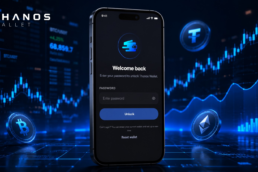
Thanos Wallet supports both LITHO and wLITHO under the same recovery phrase and within the same interface precisely because the users it is built for do not operate in a single chain environment. Someone managing a Lithosphere-native position while also holding wLITHO in an EVM protocol does not need two wallets, two phrases, and two separate sets of balance views to manage what is fundamentally one asset expressed in two environments. Both balances are visible in Thanos Wallet, both are controlled by the same credential, and moving between them does not require leaving the wallet to find a different application.
The same logic applies to the broader asset support in Thanos Wallet. Bitcoin, Ethereum, and EVM-based assets are present alongside LITHO, wLITHO, and FGPT not as a gesture toward multi-chain credibility but because the Lithosphere ecosystem user is not operating in isolation from the rest of the crypto landscape. The wallet’s asset range reflects where those users actually are — across native Lithosphere activity, EVM-compatible networks, and the major non-ecosystem assets they are likely to hold alongside their Lithosphere positions — and supports all of it through one interface rather than requiring separate tooling for each context.
Understanding the LITHO and wLITHO distinction also clarifies why Thanos Wallet is structured as a multi-chain wallet rather than an ecosystem-only wallet with some extra features. The Lithosphere ecosystem, by design, reaches into EVM environments through wrapped representations of its native assets. A wallet that only handled the native side would leave users without tooling for the EVM side of the same activity. Thanos Wallet handles both because that is what the ecosystem’s actual structure requires.